Autonomous's Lamp stands 18.43 inches tall, moves on five servos and runs open-source software that lets Claude Code, Codex or Hermes see, hear and speak. Here is what the specs, the repo and the price page actually say.
Lamp stands 18.43 inches tall on a 7.87-inch-square base, moves on five position-feedback servos and costs $699 on its maker's price page [1]. Autonomous, the company that launched on Kickstarter in 2015 with a standing desk [2], built it as a body for software agents: a camera, a microphone array, stereo speakers and a ring of light on an articulated arm, running an open-source operating system [1][4].
Product information, not sponsored content.
What Lamp is
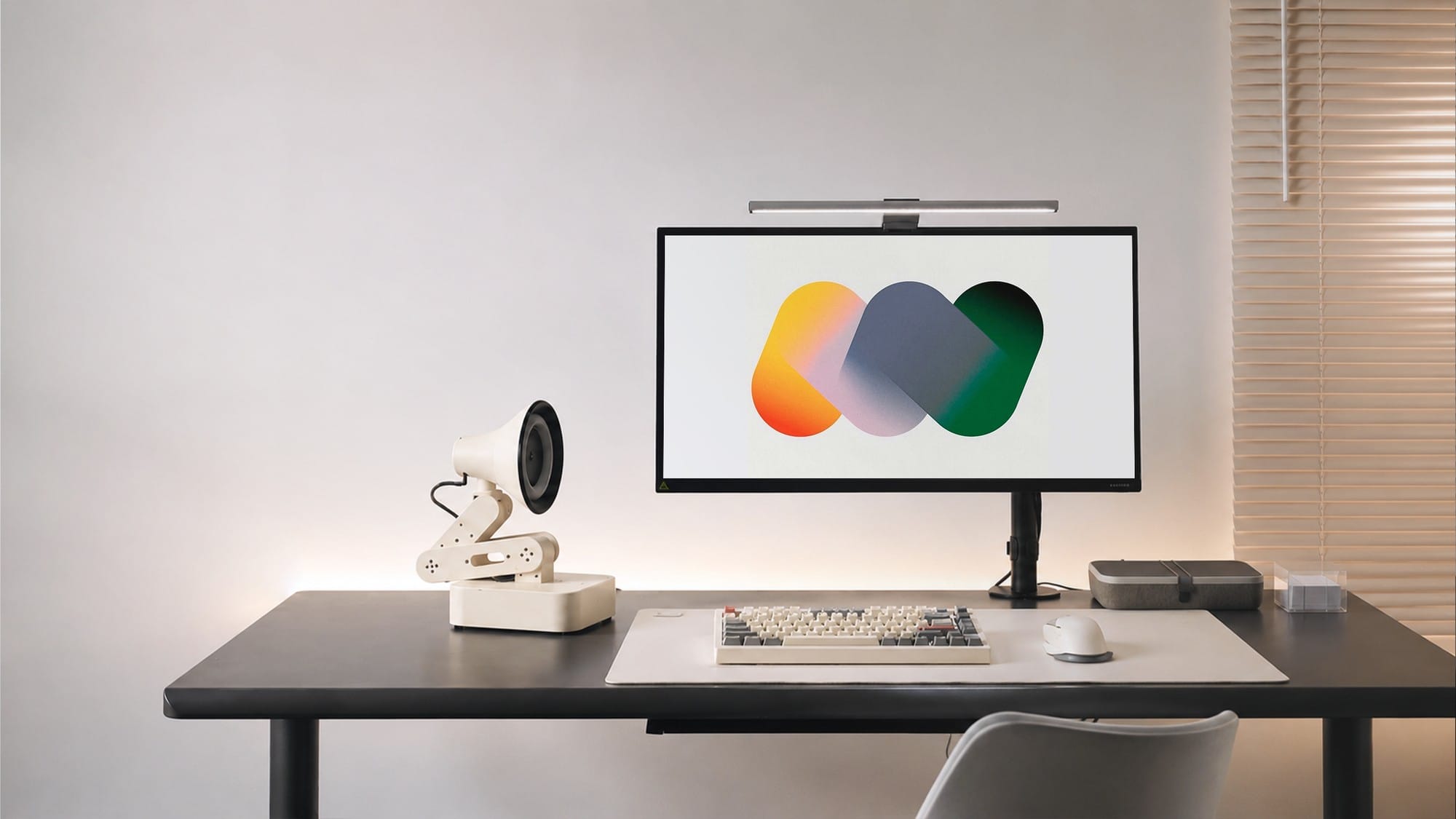
Lamp is a fully assembled desk robot, not a kit [1]. The head carries a wide-angle camera with face tracking and motion sensing, and the base holds a built-in microphone array and stereo speakers [1]. Five position-feedback servos move the arm and head: Autonomous says Lamp can nod, tilt and play recorded gestures [1]. It runs from a 12 V, 5 A DC supply, so it stays plugged in at the desk [1][8]. It has no screen and communicates through light, motion and voice [5].
There are two models. Lamp is $699. Lamp Pro is $999 and adds room sensors for CO₂, airborne particles, temperature and humidity [1].
Music: “Cheery Monday” by Kevin MacLeod (incompetech.com), licensed under Creative Commons Attribution 4.0.
What it does
Autonomous pitches Lamp three ways: enjoy it, build with it, and build a business on it [1].
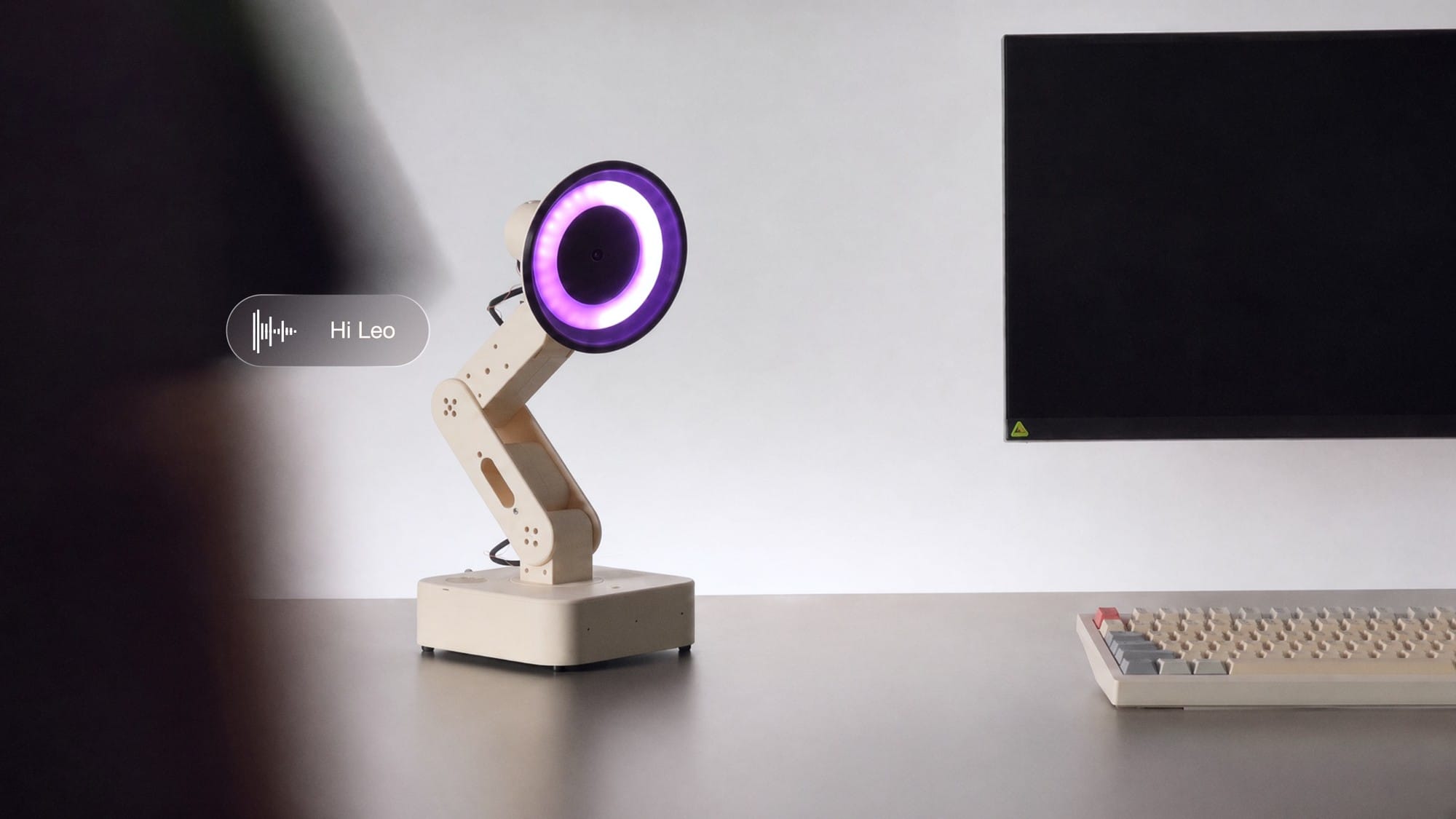
Talk and play. You can ask it a question, show it an object through its camera, pick a voice from a supported speech service and write its personality [1]. The character lives in a plain-text file called SOUL.md that you can edit [4].
Small daily habits. Autonomous lists posture feedback, hydration reminders and break routines. Camera-based skills use a supported sensing service, so not every skill runs on the device [1]. The hydration clip in our video is Autonomous's own demo of that idea.
A face for your coding agent. Hermes, Claude Code, Codex, OpenClaw, OpenCode and PicoClaw are the supported agents [1]. Autonomous's blog describes Lamp reading out what tool a Claude Code permission prompt wants to run, then approving or denying when you answer aloud [8].
Home and work hooks. Home Assistant control is something you build, and Autonomous frames Lamp as a platform for shops, classrooms, teams and creators: "You bring the idea and the customer. We provide the hardware and OS." [1]
How it works
Lamp is the showcase body for Autonomous's open-source Physical AI Operating System, published on GitHub as lampOS [4]. The product page names the operating system “Autonomous OS, open source” [1]. The OS runs on the robot and coordinates hardware and agent tasks. The product page says you can connect a cloud model or a compatible local model running on your own hardware, so it can run online or offline [1]. The repo notes that model inference may use remote services, depending on how you configure it [4].
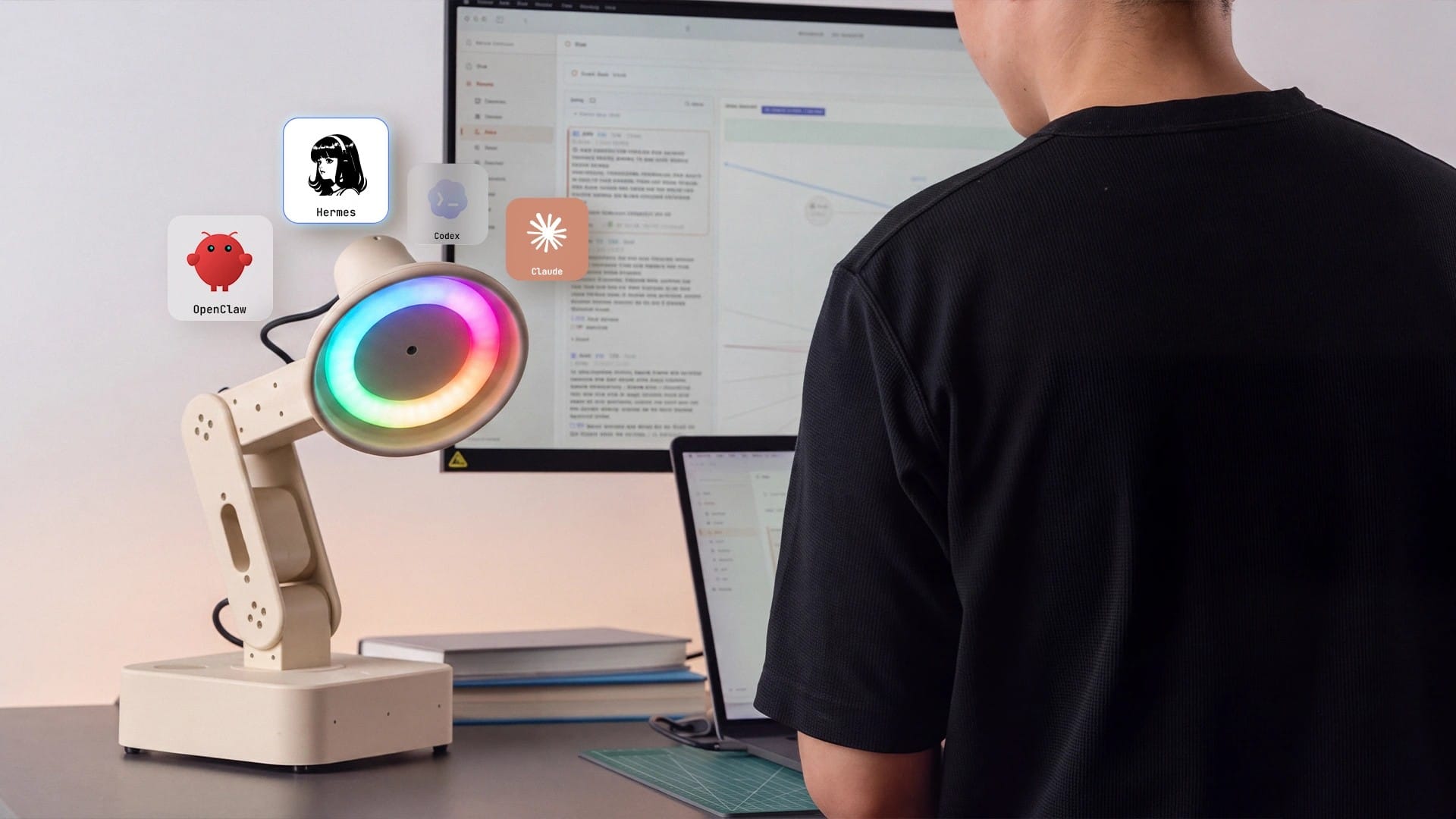
The repo describes a stack where each layer only uses the one below it [4]:
- Apps and skills. A skill is one folder with one
SKILL.mdfile the agent reads. Hardware skills emit markers that the OS dispatches, so a skill never touches a servo bus directly [4]. - Agent runtime. Six engines (Hermes, OpenClaw, PicoClaw, Codex, Claude Code, OpenCode) sit behind a single 76-method
AgentGateway. You can switch between them from the web UI [4]. - System services and voice. A Go daemon,
os-server, handles requests. The realtime voice layer supports Gemini Live, OpenAI Realtime and Pipecat [4]. - Capabilities and drivers. Each robot declares what it has (audio, vision, motion, light and others) in a
ROBOT.mdfile, and a hardware layer exposes 111 HTTP endpoints [4][5]. - Safety gate. A rules file, not the language model, sets the limits [4][6].
That last layer is the one engineers should read. In the repo's SAFETY.md for Lamp, joint speed is capped at 120 degrees per second, the ring light has a brightness ceiling of 120 out of 255 that drops to 40 between 22:00 and 07:00, and stop commands are never gated by the agent [6]. The file's own first principle: "safety is below the brain" [6]. By default the repo also configures a wake word, so Lamp waits to be addressed instead of answering every conversation in the room [5].
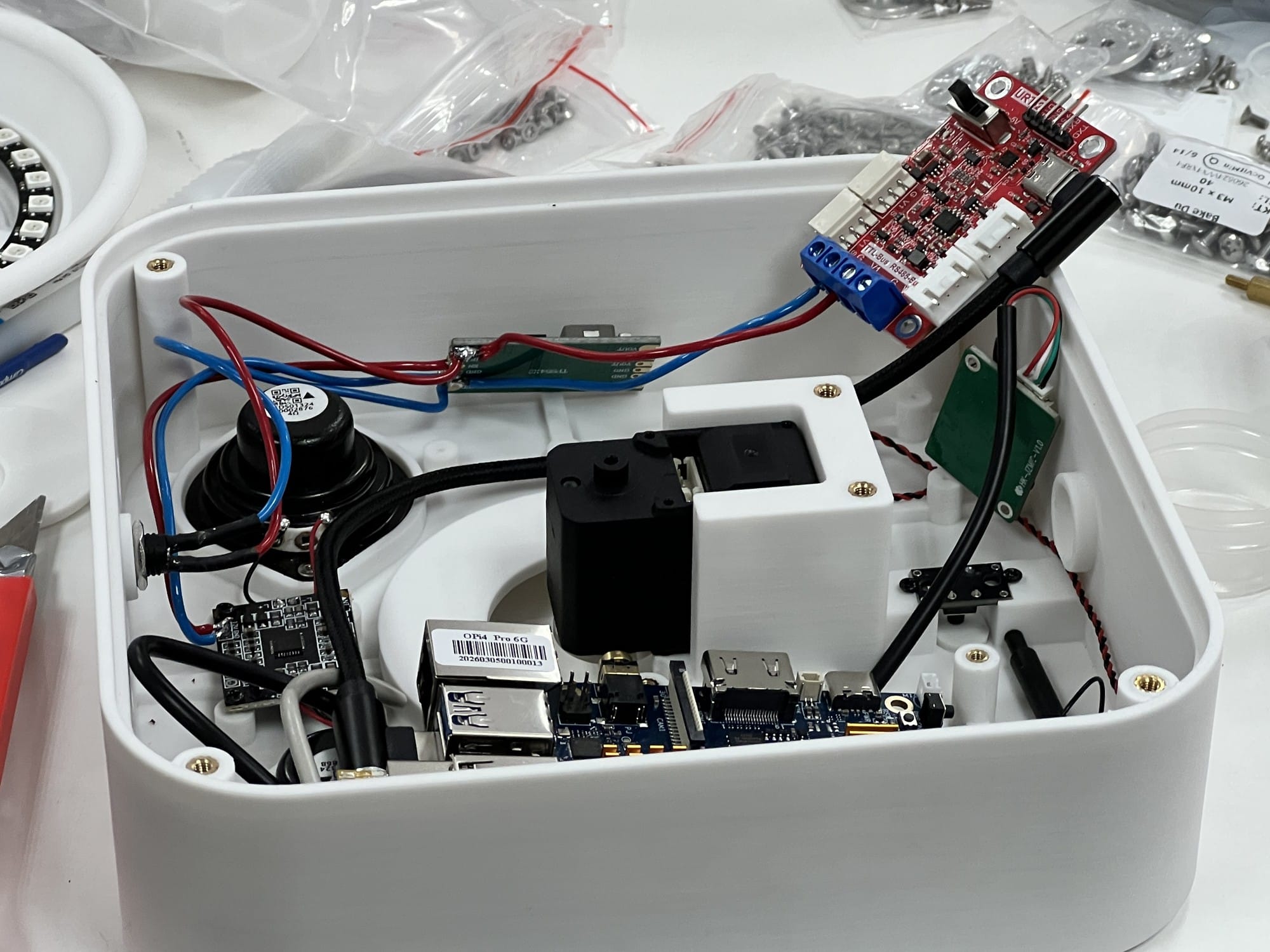
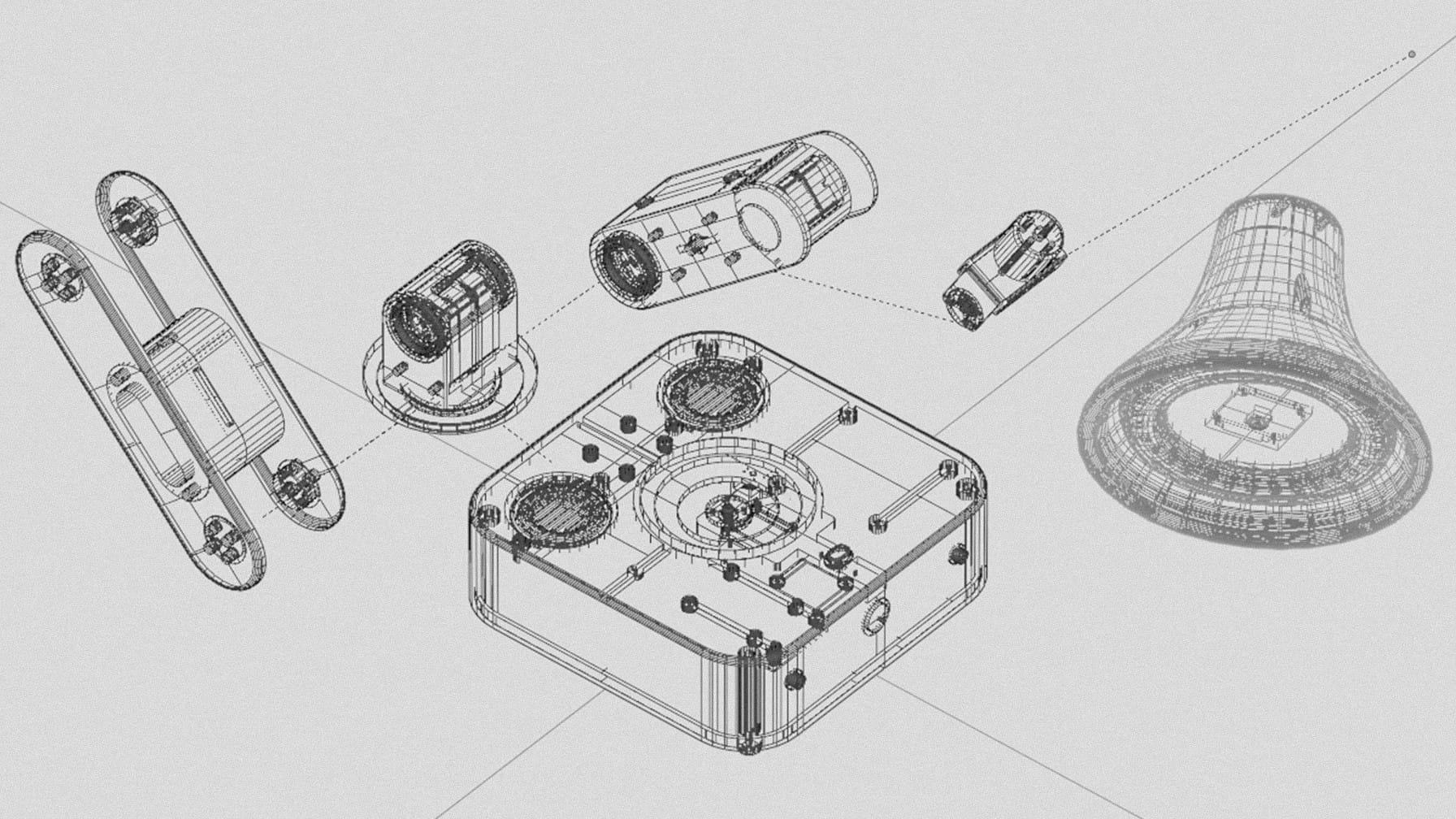
On hardware, Autonomous's build guide for a self-assembled Lamp names the OrangePi 4 Pro as "our board", five Feetech STS3215 bus servos, a 64-LED WS2812 ring and a single 12 V / 5 A adapter. The body is 17 parts, each published as STEP and STL files [7]. The product page lists an 8-core ARM64 CPU and 6 GB of RAM [1]. Whether shipping units use the exact parts in the guide is not stated on the pages we read.
Licensing matters if you plan to sell skills or robots on top. Everything outside the hal/ folder is Apache-2.0, hal/ is GPL-3.0, and Autonomous itself flags that the YOLOv8 tracking model is AGPL-3.0 and tells builders to "read it before you ship" [4].
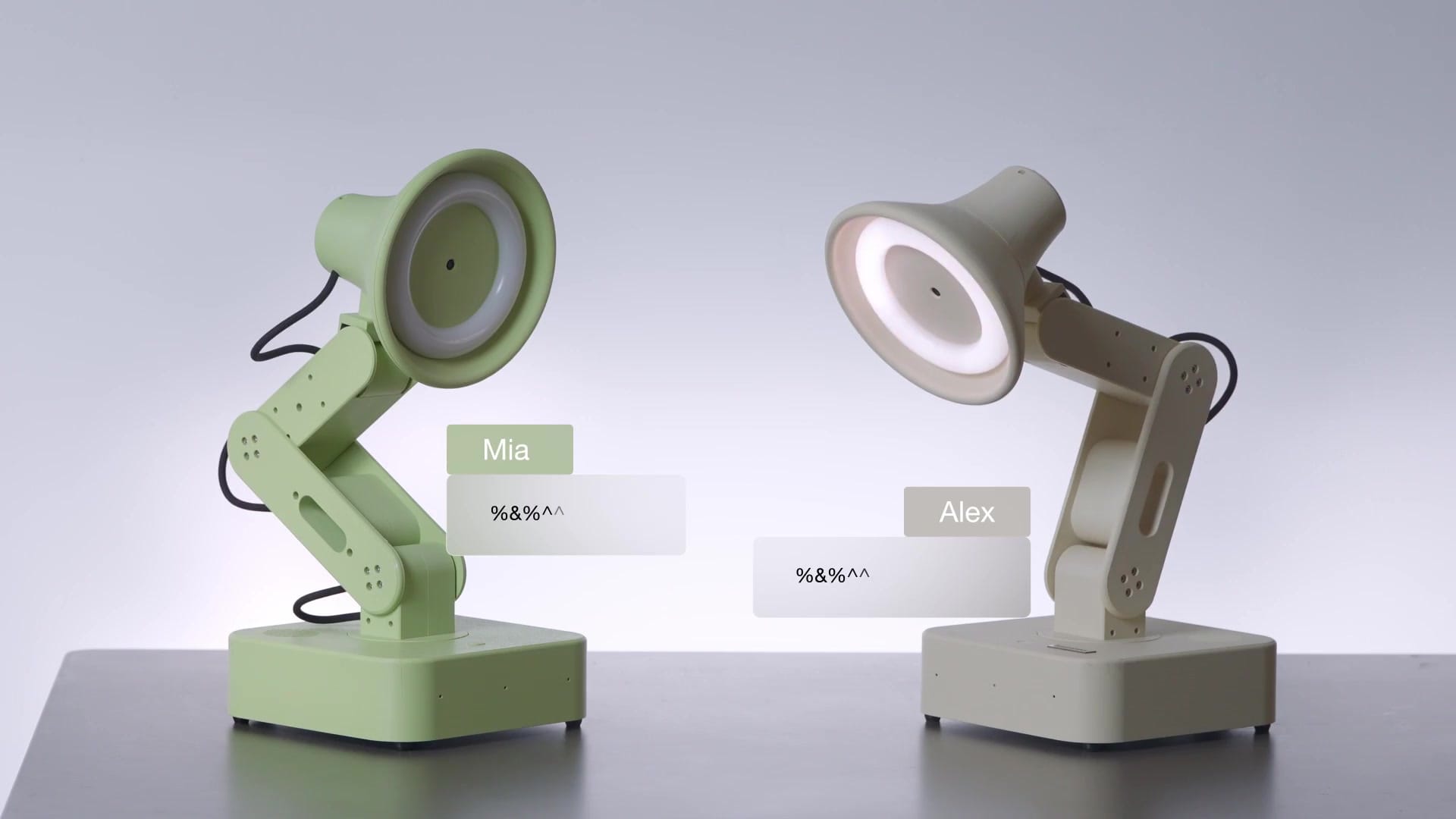
Autonomous says the OS is not tied to one body. It also runs on Hugging Face's Reachy Mini, and a Lamp placed next to one will hold a conversation, because each hears the other's reply as its next input [4].
Design and colourways
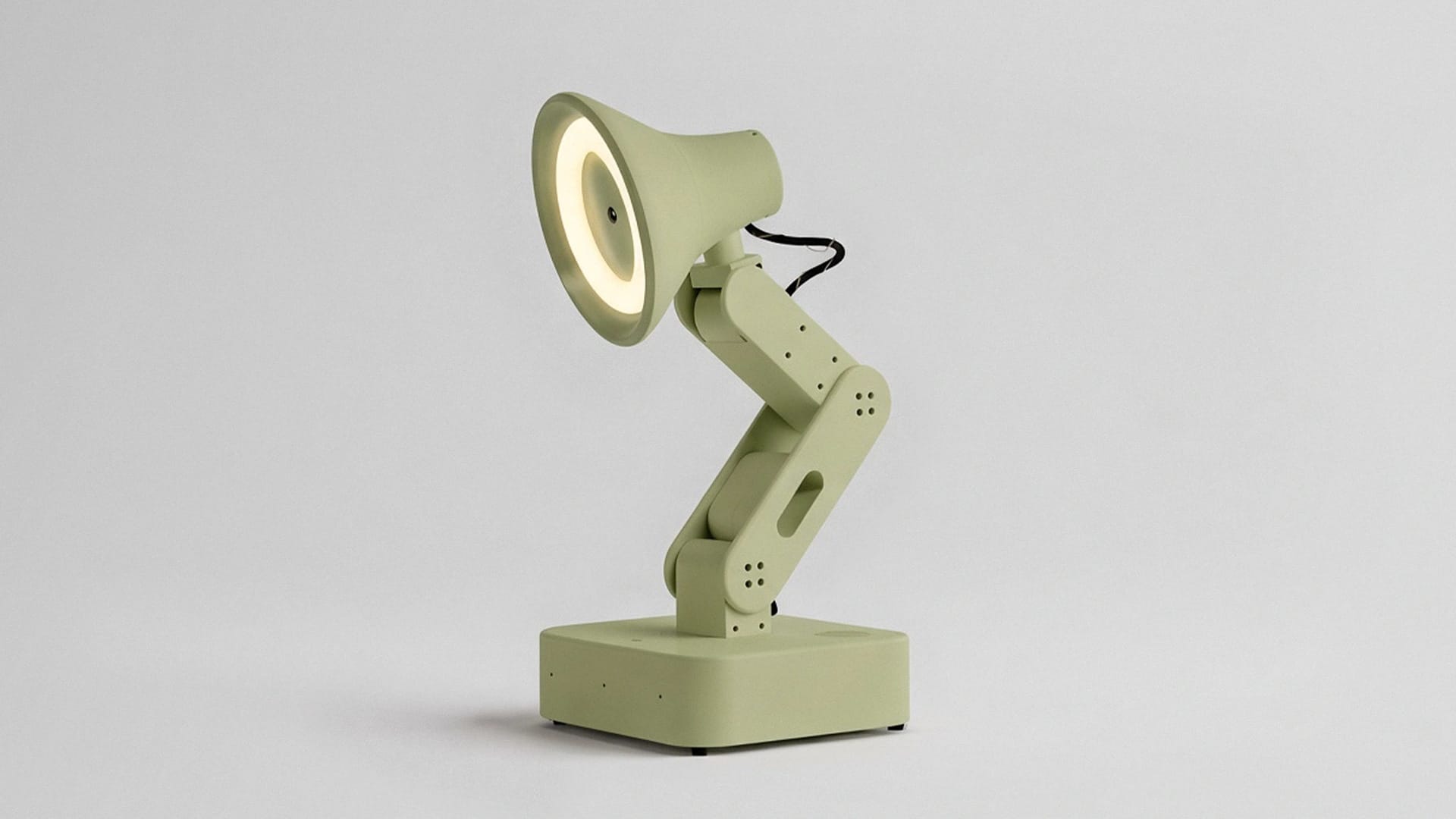
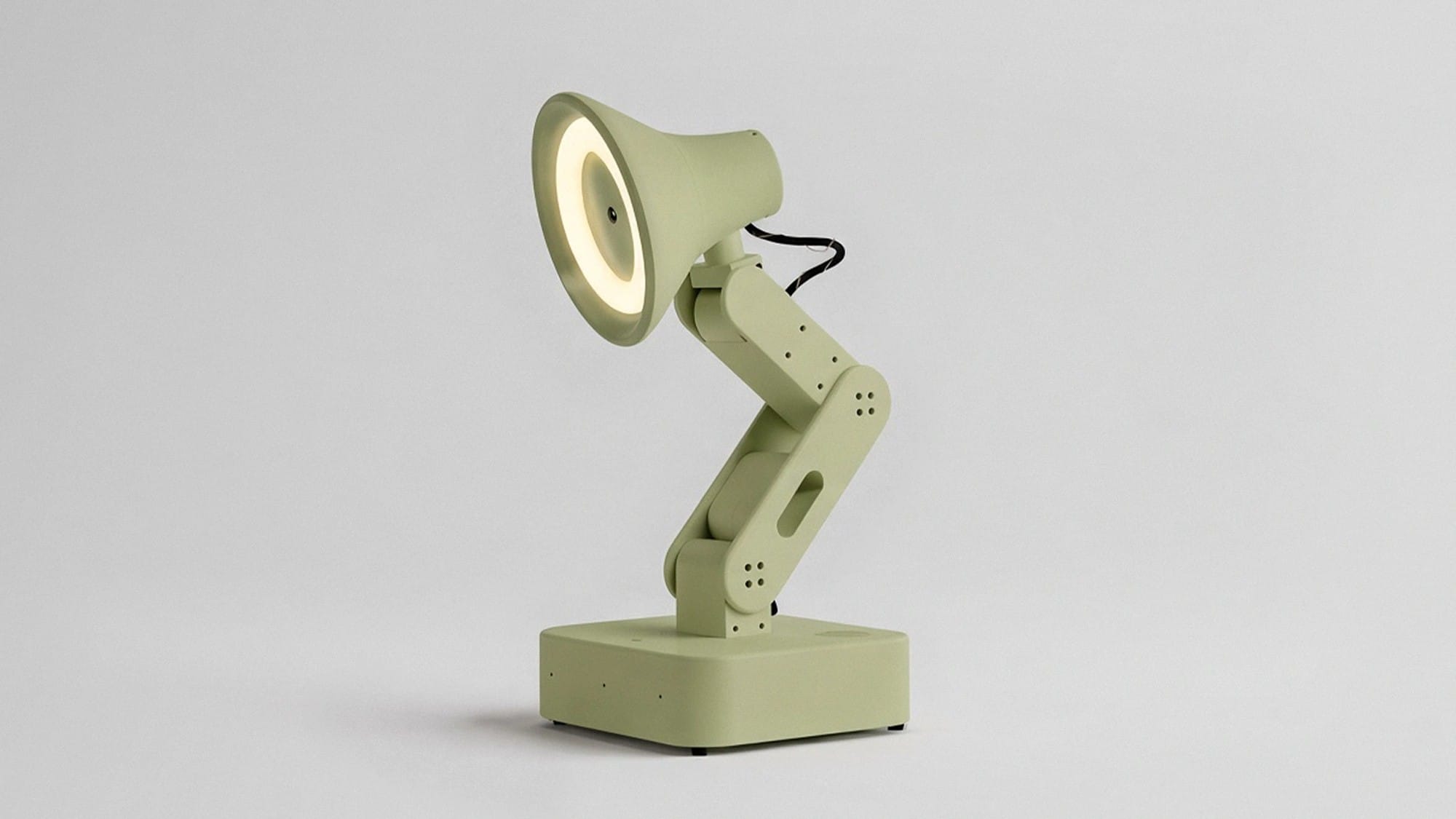
Autonomous lists four colours: Charcoal, Dune, Cloud and Matcha [1]. We were supplied photos of three.
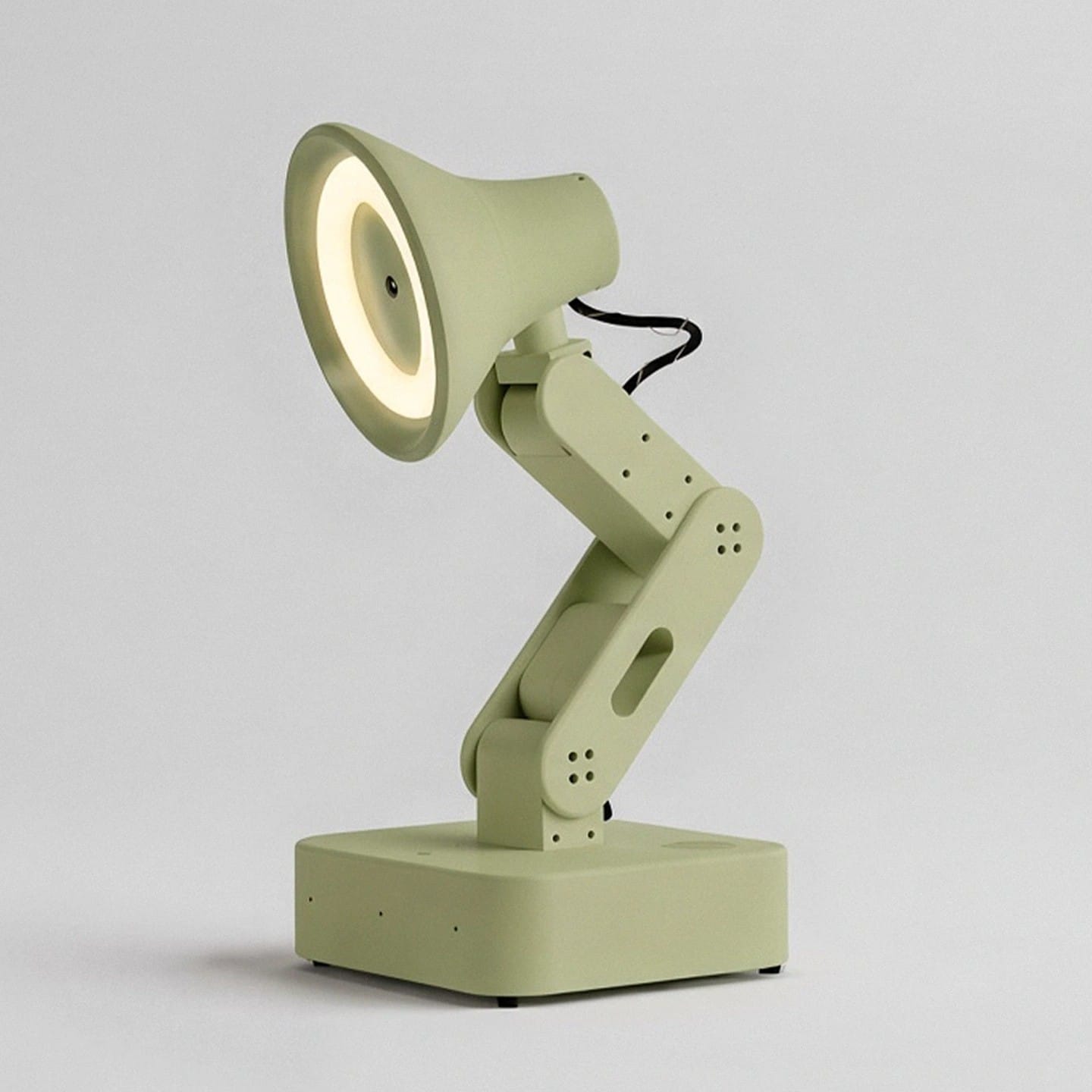
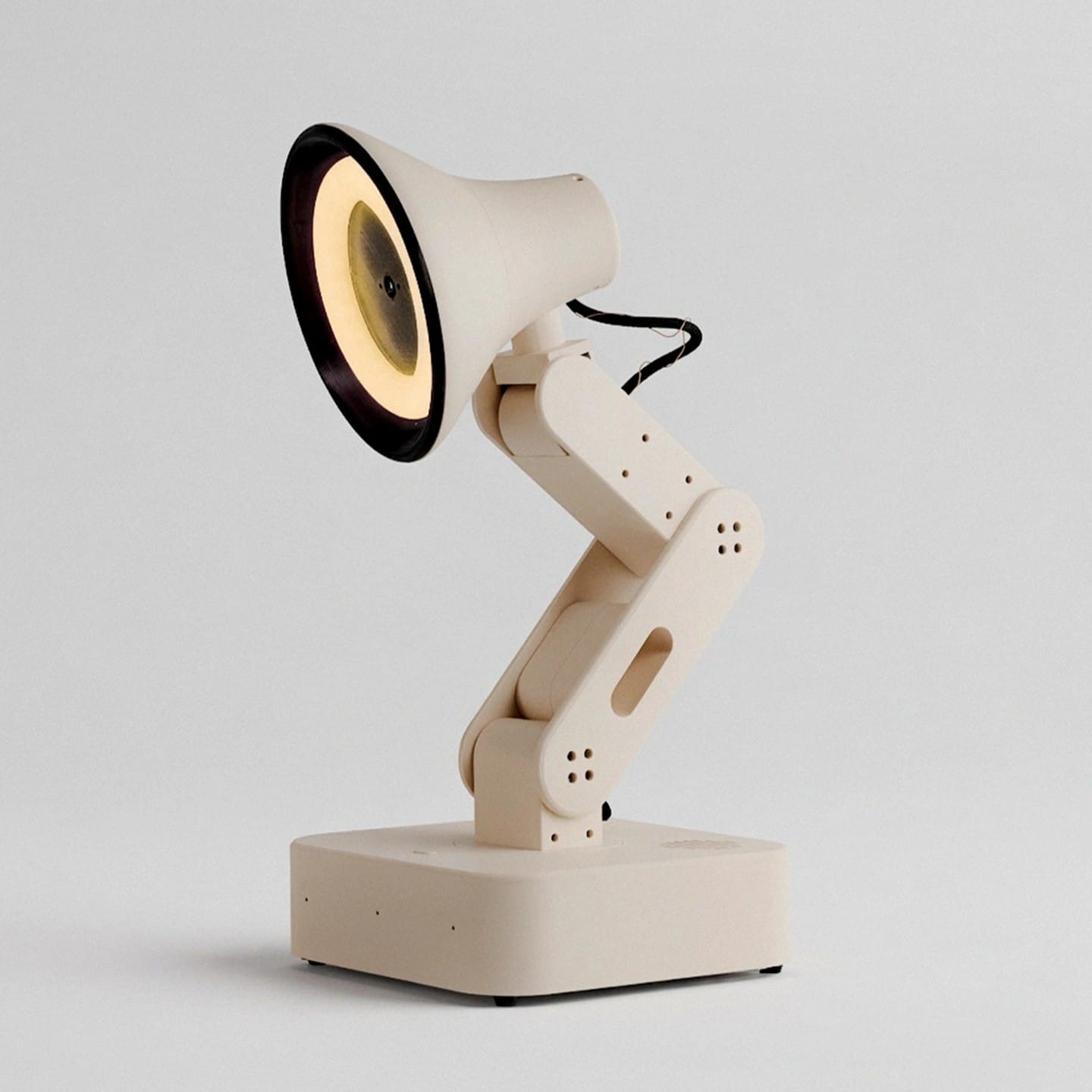
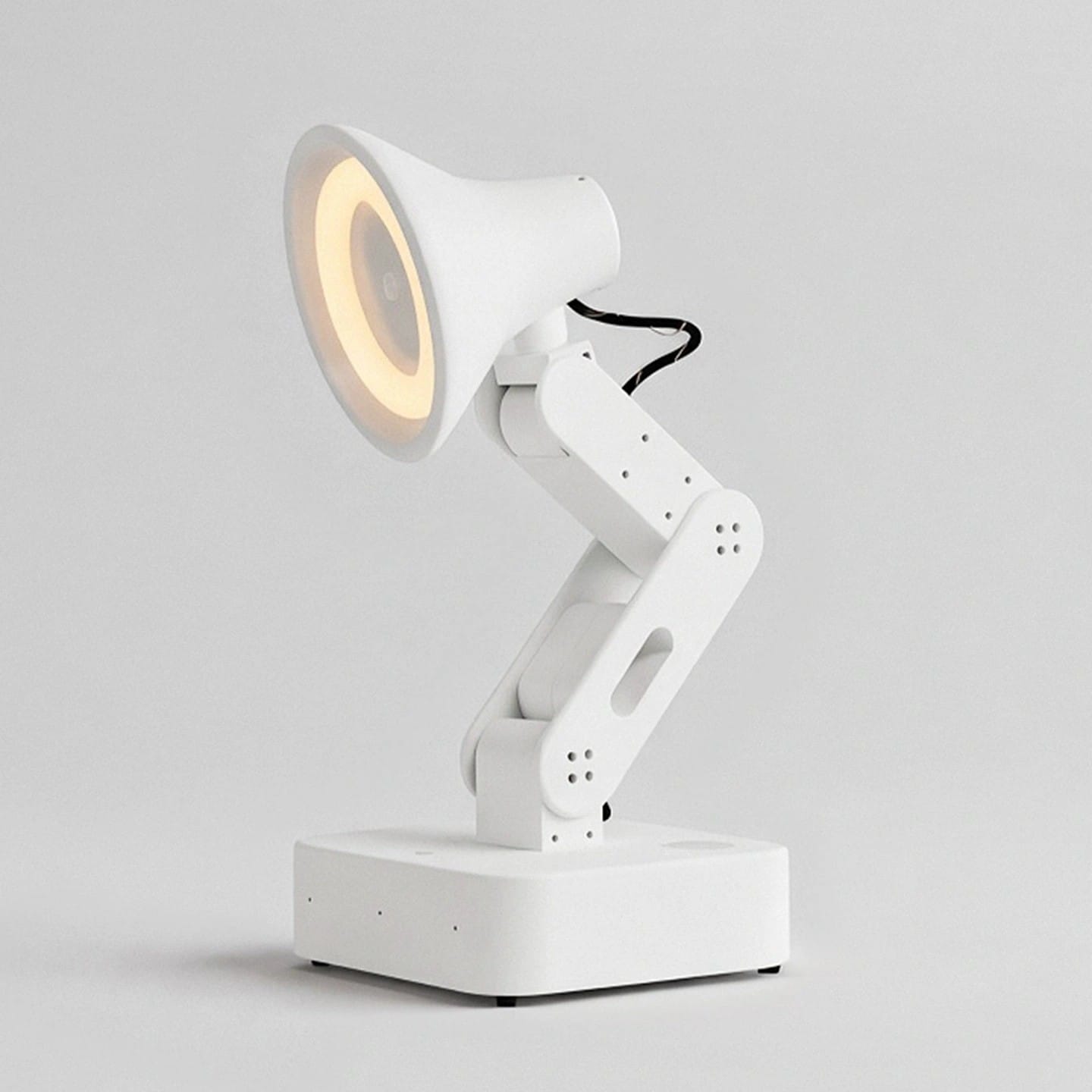
Matcha, Dune and Cloud. Image: Autonomous
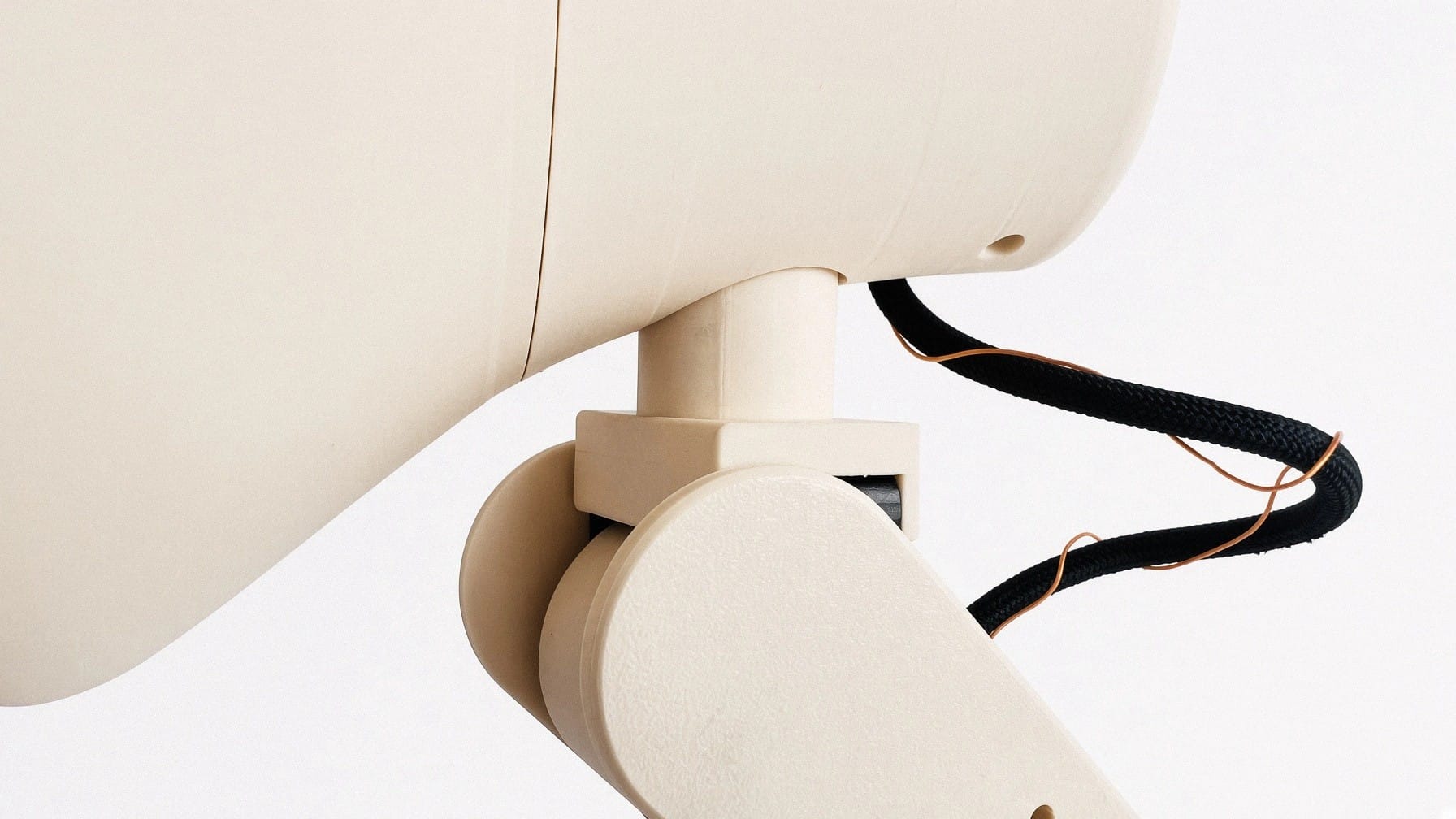
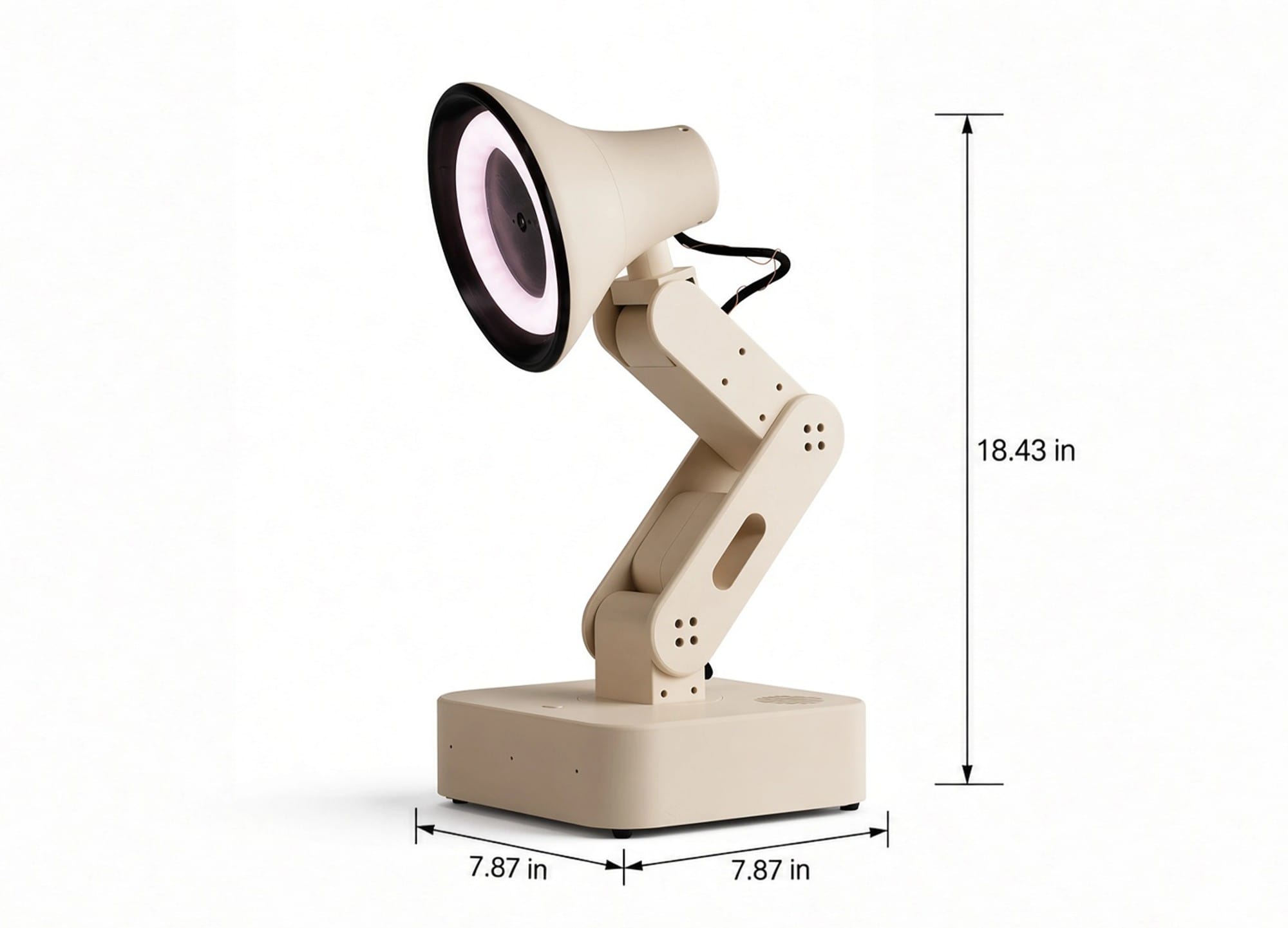
The photos show a bell-shaped head with the light ring set inside it, a lens at the centre, and an arm of slim links with rows of small holes. The cable that wraps the head joint is left visible rather than hidden.
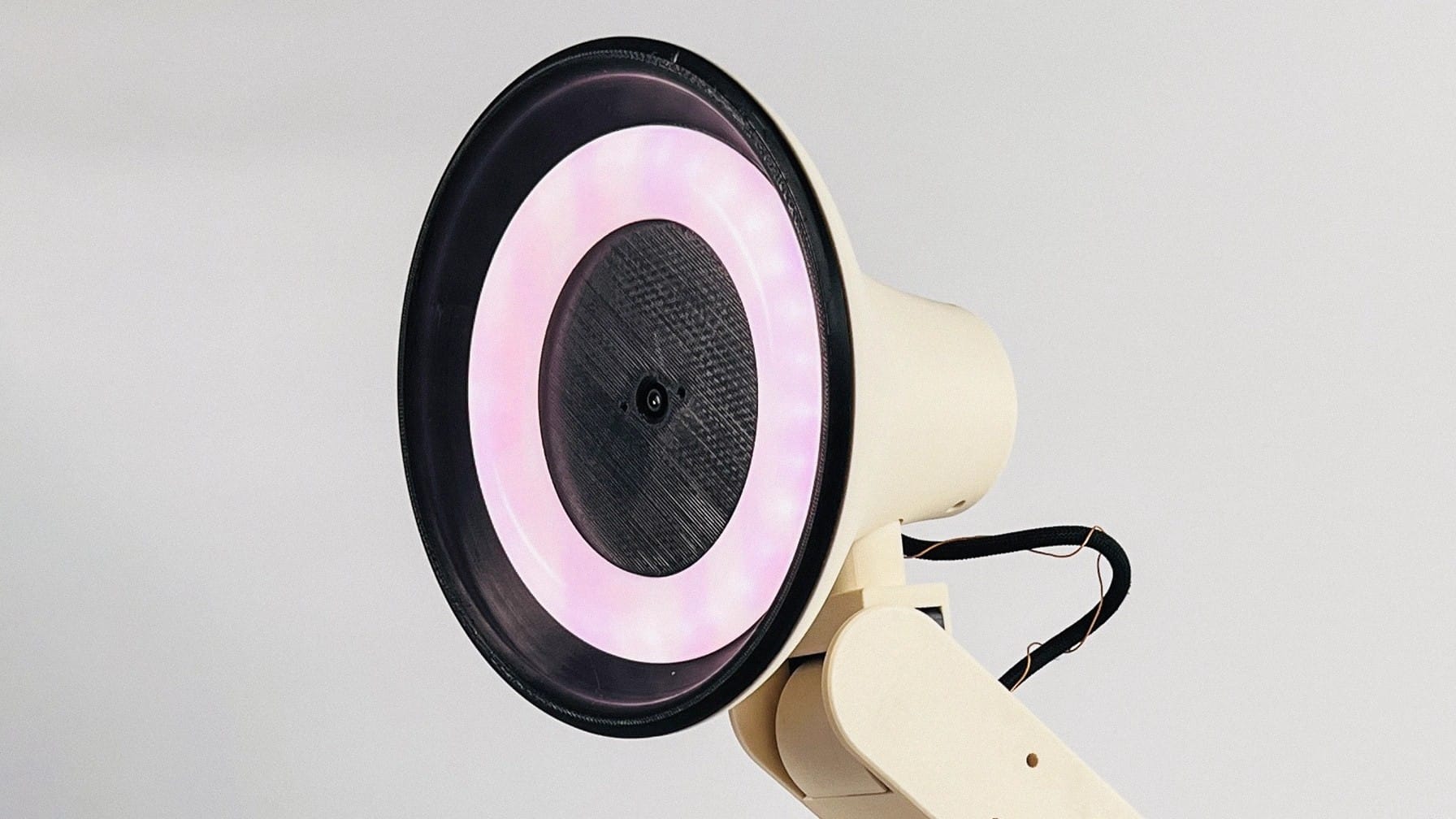
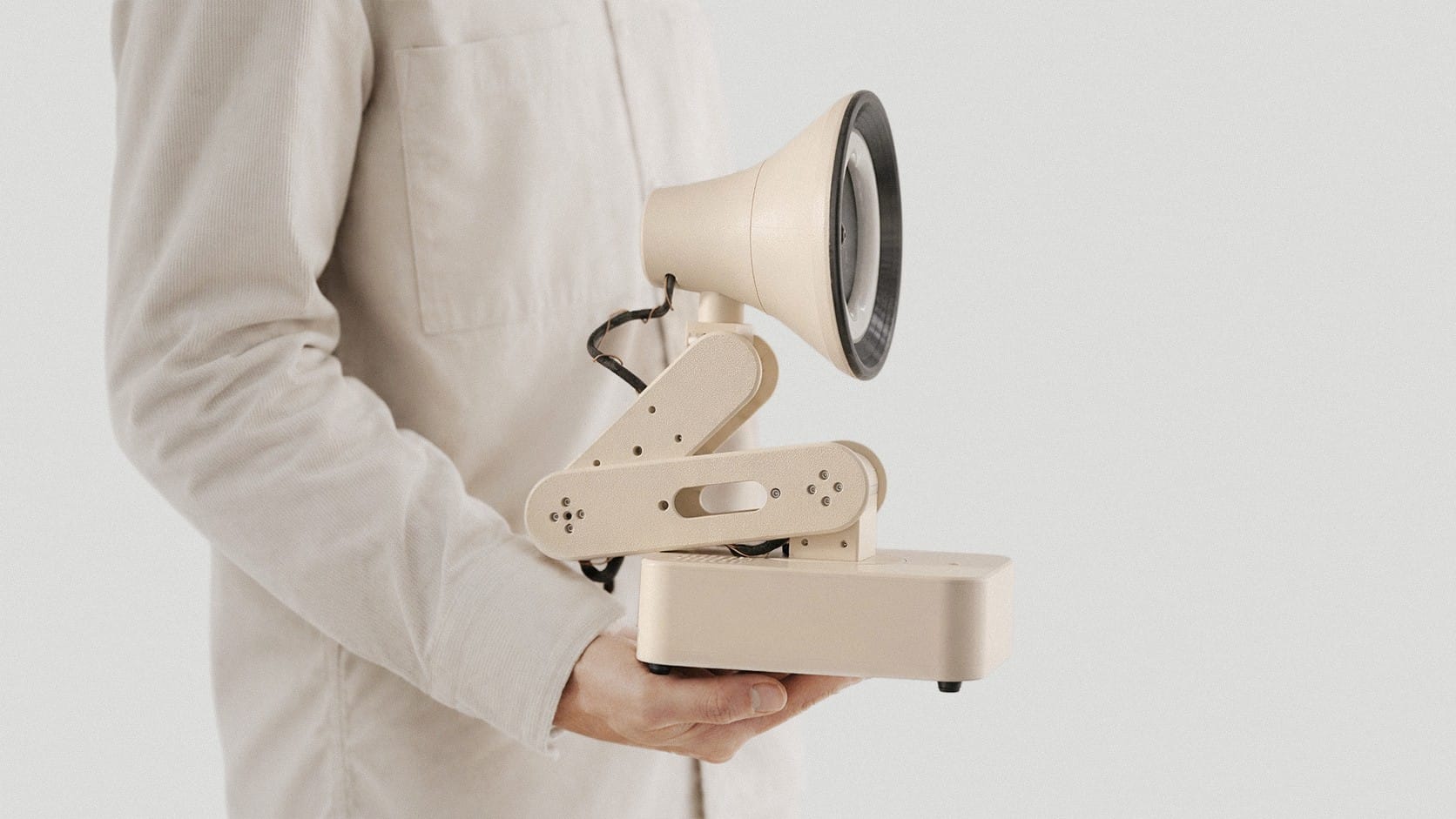
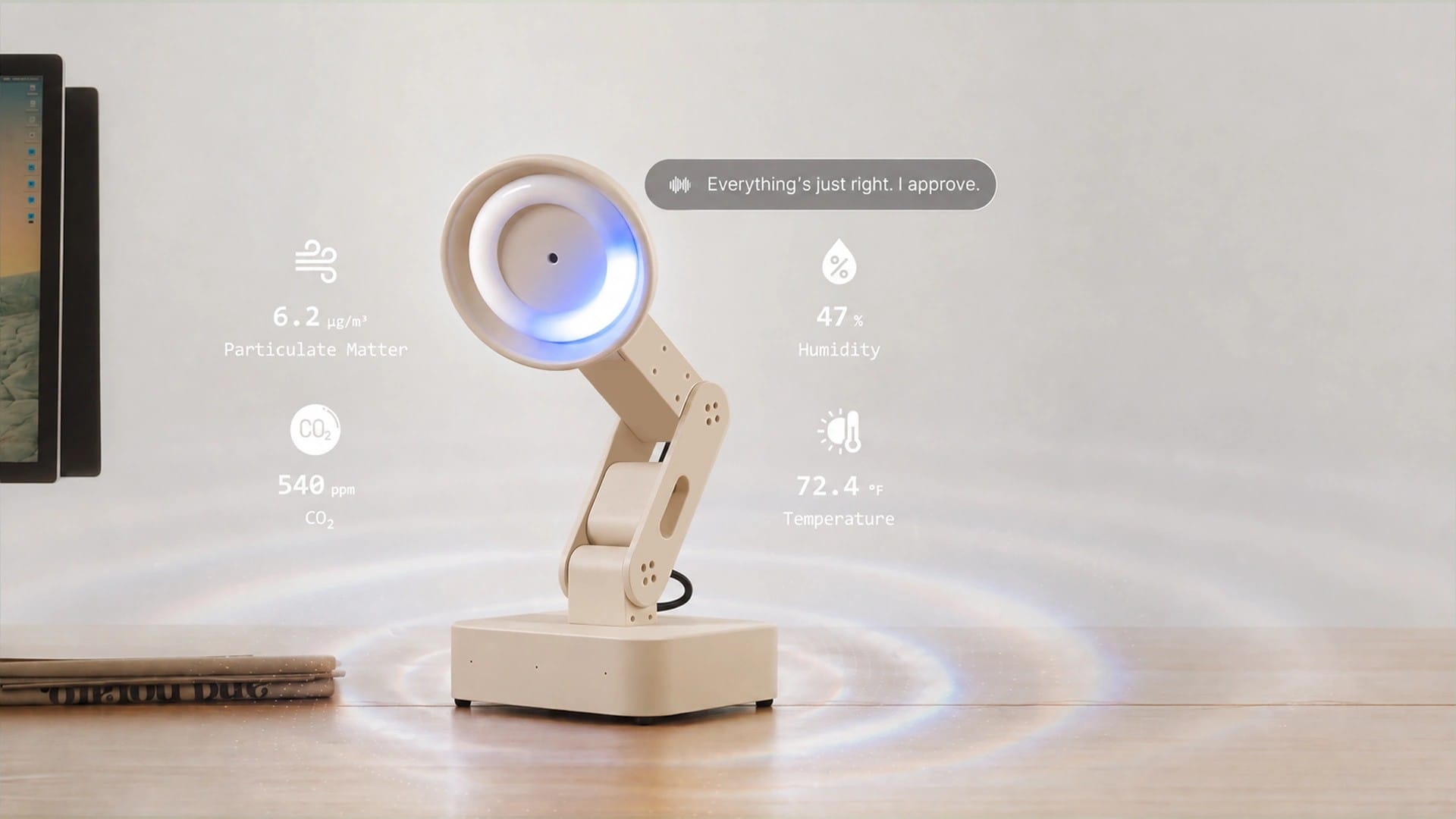
Lamp Pro adds the sensors. Autonomous's product illustration shows readings for particulate matter, humidity, CO₂ and temperature, with a spoken line from Lamp. The page labels these images as illustrations, so treat the numbers on them as examples, not measurements [1].
Specs
| Spec | Lamp | Source |
|---|---|---|
| Form | Robotic desk lamp | Product page [1] |
| Height | 18.43 in (about 46.8 cm, our conversion) | Specs image, product page [1] |
| Base footprint | 7.87 × 7.87 in (about 20.0 × 20.0 cm, our conversion) | Specs image, product page [1] |
| Movement | 5 position-feedback servos | Product page [1] |
| Vision | Wide-angle camera, face tracking, motion sensing | Product page [1] |
| Audio | Built-in microphone array, built-in stereo speakers | Product page [1] |
| Power | 12 V, 5 A DC | Product page [1] |
| Compute | 8-core ARM64 CPU | Product page [1] |
| Memory | 6 GB RAM | Product page [1] |
| Operating system | Autonomous OS, open source | Product page [1] |
| Where it runs | A cloud model, or a compatible local model on your own hardware (online or offline) | Product page [1] |
| Runs with | Claude Code, Codex, Hermes, OpenClaw, OpenCode, Pi; "more joining" | Product page [1] |
| Colours | Charcoal, Dune, Cloud, Matcha | Product page [1] |
| Warranty and returns | 1-year warranty; free 30-day returns | Product page [1] |
| Weight | Not shown (see "What we could not confirm") | n/a |
The specs image itself carries three numbers: the 18.43 in height and the two 7.87 in base edges. Everything else in the table is from Autonomous's product page.
Lamp Pro adds (Autonomous's sensor figures, as listed on its page) [1]:
| Sensor spec | Lamp Pro |
|---|---|
| Particle mass concentration range | 0 to 1000 µg/m³ |
| Particle mass concentration precision | ±10 % |
| Particle size ranges | PM1.0, PM2.5, PM4 and PM10 |
| Humidity accuracy (typical) | 4.5 %RH |
| Temperature accuracy (typical) | 0.45 °C (shown in °F or °C) |
| CO₂ output range | 0 to 32,000 ppm |
| CO₂ accuracy | ±100 ppm |
Price and availability
- Lamp: $699. Lamp Pro: $999 [1].
- Volume pricing on the Lamp page: $678 each for 3-4 units, $664 for 5-9, $657 for 10-29 and $650 for 30 or more [1].
- Shipping and returns: on 15 November the page still showed "Free shipping Dec 19" next to the price, plus free 30-day returns and a 1-year warranty [1].
- First deliveries: RoboActu reported on 13 November that Autonomous says its first batch cleared customs and reached its California distribution centre. Autonomous did not give a volume or a schedule for later batches [10].
Who is Autonomous
Autonomous describes itself as "an AI hardware company run by a team of enthusiast engineers" [2]. Its story starts in May 2015 with a Kickstarter for the first Autonomous Desk, an official launch in February 2016 and its first chair in October 2016 [2]. The legal entity is Autonomous, Inc., privately held, operating from New York and San Francisco [3]. By its own count it has shipped more than 3 million products since 2015 and counts more than 1 million people using an Autonomous setup daily. Those are company figures [2][3].

Lamp is a recent chapter. The About page lists Intern first (local agent hardware that runs OpenClaw), then Lamp, then a "Thinking Desk" and WorkPod homes [2]. The page is signed "Dee, leading the team at Autonomous" [2]. Autonomous's own blog is blunt about the origin: the company "did not come to this from robotics" but from more than a decade of desks and chairs [8].
Our read
This section is analysis, not company information.
- It is a presence, not a worker. RoboActu notes Lamp is not designed to manipulate objects or move around a room [10]. Its job is to put eyes, ears, a voice and motion on a software agent.
- The open layer is the product. The OS, the skill format and the safety file are public. That is what an engineer can evaluate today, and it is more than most desk gadgets offer.
- Independent verdicts are thin. Creative Bloq explicitly withheld judgement until it had tried Lamp [9], and we found no hands-on review of shipping units yet.
- Camera and microphone at eye level. Skills can send camera input to a supported sensing service and model calls may leave the device [1][4]. Check what you enable. Creative Bloq reports you can stop Lamp watching you and mute it [9].
- What to watch next: delivery to buyers, and how the Skill Store grows.
What we could not confirm
- A shipping weight. Autonomous's pages give different figures, so we left it out.
- Battery life: none is listed, and the specs describe a plugged-in 12 V supply [1].
- Speaker, microphone and camera resolution specifications beyond "wide-angle camera", "microphone array" and "stereo speakers" [1].
- Which compute board ships in production units [1][7].
- A photo of the Charcoal colourway.
Product information, not sponsored content.
© Behind Robotics. Product images, logos and footage: Autonomous.
Sources
- Autonomous, Lamp product page: price, models, colours, specs, features, shipping line, returns, warranty, volume pricing, Lamp Pro sensor specs. Re-checked 15 Nov 2026: Lamp $699, Lamp Pro $999, “Free shipping Dec 19” still shown next to the price. www.autonomous.ai · read 15 Nov 2026
- Autonomous, About page: company description, 2015 Kickstarter, 2016 launch, timeline, company figures, signed "Dee, leading the team at Autonomous". www.autonomous.ai · read 14 Nov 2026
- Autonomous, Brand Facts page: legal name Autonomous, Inc., privately held, New York and San Francisco, product range. www.autonomous.ai · read 14 Nov 2026
- Autonomous, lampOS / Physical AI Operating System README (GitHub): OS layers, agent runtimes, voice options, skills, Reachy Mini, licences. github.com · read 14 Nov 2026
- Autonomous, lampOS robots/lamp/ROBOT.md: Lamp capabilities, no screen, default wake word. github.com · read 14 Nov 2026
- Autonomous, lampOS robots/lamp/SAFETY.md: speed, light and quiet-hours limits; "safety is below the brain". github.com · read 14 Nov 2026
- Autonomous, lampOS robots/lamp/BUILD.md: parts for a self-built Lamp (OrangePi 4 Pro, Feetech STS3215 servos, WS2812 ring, 12 V / 5 A, 17 CAD parts). github.com · read 14 Nov 2026
- Autonomous blog, "The Robot Lamp That Behaves Like It's Alive" (19 Aug 2026): plugged-in power, Claude Code permission prompts, company origin. www.autonomous.ai · read 14 Nov 2026
- Creative Bloq, "Meet Lamp" by Georgia Coggan (3 Sep 2026): launch price and ship date, mute/stop watching, judgement withheld. www.creativebloq.com · read 14 Nov 2026
- RoboActu, "Lamp, le robot de bureau open source, commence ses livraisons" (13 Nov 2026, in French): first batch at California distribution centre; not built to manipulate objects or move around a room. www.roboactu.fr · read 14 Nov 2026
Facts checked 15 Nov 2026 (Asia/Shanghai). Prices, stock and ship dates on Autonomous's pages can change.