Ultra and Extend are moving robots onto their own books. Antobot is moving them off. The model is a financing choice, and the releases leave out the numbers a lender would ask for.
Robots-as-a-service is not a business model. It is a decision about whose balance sheet the robot sits on, and this week the industry moved in both directions at once.
Same week, opposite directions
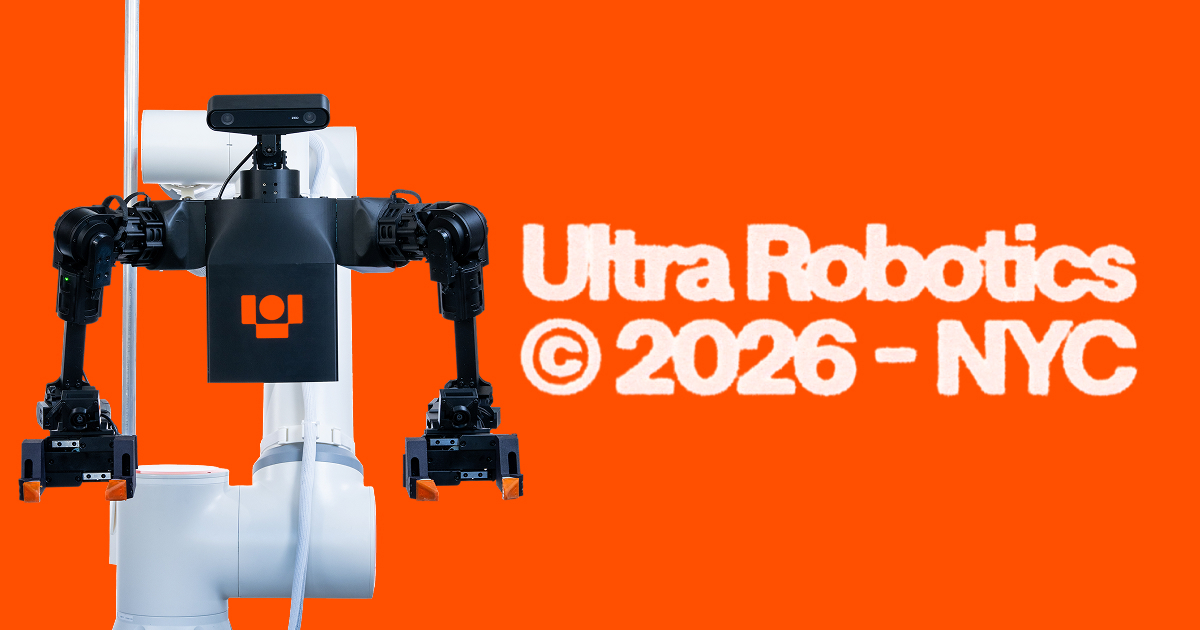
Ultra, a Brooklyn maker of dual-arm packing robots, announced $62 million on Friday: a $50 million Series A led by Framework Ventures with Y Combinator, plus an earlier $12 million seed led by Y Combinator and Next View.[1] Its customers, mostly third-party logistics warehouses, pay an up-front integration fee and then a monthly fee for hardware and software support. They never buy the robot.[1]
In Reading, Extend Robotics raised £2.6 million, led by Skyworks Venture Capital Fund, to go one step further. Its "Result-as-a-Service" customers pay for completed work, parts inspected or items handled, priced like labour. "Carry the risk ourselves" is how chief executive Chang Liu puts it.[4]
Meanwhile Antobot, the UK strawberry-robot company, said at Fruit Attraction that it is moving from a service model toward selling equipment outright.[5] And Croptimal launched a tractor-mounted seed-potato scanner at €95,000 plus €4,000 a year for service and algorithm updates: a purchase with a subscription tail.[6]
Who carries the robot
| Company | Model | Owner | Customer pays | Price |
|---|---|---|---|---|
| Ultra | Robots-as-a-service | Ultra | Integration fee + monthly fee | — not published |
| Extend Robotics | Result-as-a-Service | Extend | Per unit of completed work | — not published |
| Croptimal (Croptiscan 3000) | Purchase + subscription | Grower | €95,000 + €4,000/yr | Published |
| Antobot (U502) | Moving to direct sale | Grower | Purchase | — not published |
A Series A that buys a fleet
When the vendor keeps the robot, the vendor finances the fleet. Every Ultra unit on a warehouse floor is inventory Ultra paid for and recovers month by month. That makes a Series A partly a fleet-capex facility priced at venture rates, the most expensive money there is.
Neither announcement disclosed a debt facility. Neither disclosed revenue: Ultra says it has booked "significant" revenue and raised prices, without numbers.[1] Ultra has not said how many robots are deployed; Runtime Wire notes the funding release carried no deployment counts.[2] Its operating proof is a cumulative count, more than 500,000 orders packed, which is company-reported.[1]
What the two RaaS announcements actually disclosed
| Item | Ultra | Extend Robotics |
|---|---|---|
| Funding amount | $50m A + $12m seed | £2.6m |
| Revenue | Undisclosed ("significant") | Growth only: doubled YoY, 3 years |
| Robots deployed | — not published | — not published |
| Customers | 3 named (Runtime Wire) | 35 subscription customers (claim) |
| Price | — not published (raised) | — not published |
| Autonomy | 96.4%, one shift, partner-reported | — not published |
| Debt facility | None disclosed | None disclosed |
Autonomy is the margin line
The service model also hides the humans. Ultra's partner Physical Intelligence reported one Ultra robot running a full eight-hour shift at 96.4% autonomy on its π0.6 model, with a remote intervention team stepping in when the model fails.[3] That is one shift, reported by a partner, not a fleet average. Extend is more candid: its AMAS platform is remote human operators with AI handling the routine parts, and autonomy rising over time.[4] In both cases, the monthly fee pays for people as well as the machine. The margin depends on how fast that headcount falls.

Why Antobot is selling the box
Why would Antobot walk the other way? Selling the hardware brings cash in at the point of sale and moves fleet risk onto the grower. The price is losing the recurring fee and the close relationship with how the robot is used. Antobot's U502 price is not published, so the trade cannot be costed from outside.[5]
Croptimal shows the hybrid. On its published numbers, a grower who keeps the machine five years pays €115,000, of which €20,000, about 17%, is the service line (Behind Robotics arithmetic, assuming the fee starts in year one).[6] The fee is small enough to sell to a farmer and large enough to fund the algorithm updates that make the machine better each season.
Five-year cost of ownership on Croptimal's published prices
Who owns the learning
The fourth layer is the brain. Ultra builds the bodies and rents its intelligence from Physical Intelligence, which Fortune reports is valued at $5.6 billion.[1] Physical Intelligence gets field data from live deployments in return.[3] Strip the model out and Ultra's fee covers a white-label robot, an install crew and a remote operations desk. The defensible asset may be the deployment data, and Physical Intelligence is collecting it too.
Read RaaS announcements the way a lender would. Who owns the unit? What does the customer pay, and when? How many units are deployed? How many remote operators does each one need? Most releases answer the first two and skip the last two.
Sources
- Fortune Term Sheet, 'Ultra raises $62 million for fast-growing robots as a service business...', 9 Oct 2026. fortune.com
- Runtime Wire, 'Ultra raises $50M to put warehouse robots on more floors', 9 Oct 2026. runtimewire.com
- Physical Intelligence, 'The Physical Intelligence Layer' (Ultra section), 24 Feb 2026. www.pi.website
- UK AI News, 'Extend Robotics raises £2.6M to sell factory work by the outcome', 9 Oct 2026. uk-ai.news
- Fruitnet / FPJ, 'Antobot unveils new UV-C robot model', Oct 2026. www.fruitnet.com
- Potato Gazette, 'Croptimal Launches Entry-Level Seed Potato Robot', 8 Oct 2026. potatogazette.com
- The New Warehouse (YouTube), 'This Warehouse Robot Packs Your E-Commerce Orders | Ultra Robotics'. www.youtube.com
- Extend Robotics (official YouTube), 'Unitree humanoid robot visited apple fruit factory'. www.youtube.com